A failed commercial air conditioner can damage stock, disrupt staff and equipment, and turn a local fault into a costly shutdown. You will be able to make the system safe, protect critical areas, estimate temporary cooling capacity, and choose between repair and short-term rental without relying on horsepower labels alone.
Key takeaways
- Isolate unsafe equipment and record alarms, temperatures, leaks and electrical faults.
- Calculate the failed zone’s cooling load before selecting a temporary unit.
- Match portable, split or ducted rental equipment to the building and affected area.
- Compare repair time, lost operations and emergency rental costs before deciding.
The first 30 minutes: make the failure safe and record the facts
When business AC failure cooling begins, make the failed system safe before chasing the fault. Stop operation if you smell burning, see exposed wiring or water near electrics, hear abnormal compressor noise, or find a tripped protection device that will not reset.
Do not open electrical panels, bypass overload protection, touch refrigerant lines or repeatedly restart the compressor.
- Record the exact failure time, affected rooms, indoor temperature, thermostat setting and any alarm code.
- Check the thermostat mode, setpoint, isolator and accessible breaker once; do not keep resetting a breaker that trips again.
- Protect temperature-sensitive stock, servers and process equipment by closing doors, reducing heat-producing work and moving vulnerable items only if safe.
- Tell the technician whether cooling failed across the building or only in one zone, and photograph displays, leaks, ice and fault lights.
Use the remaining minutes to establish whether you need a repair visit or commercial AC on hire after breakdown in Andheri. Note the floor, access route, lift and door dimensions, available voltage and phase, safe connection point, drainage route and a place to discharge hot air.
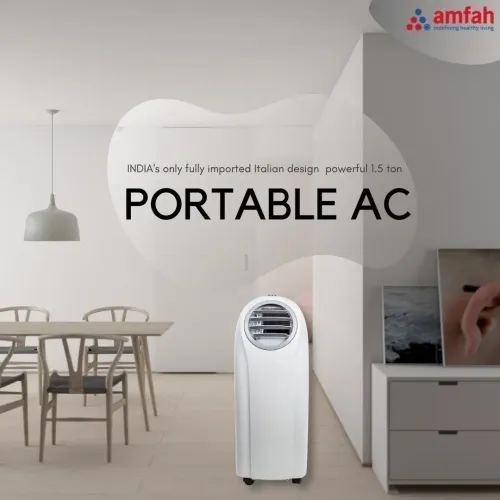
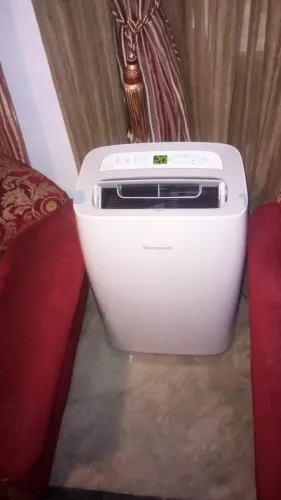
A portable spot cooler can protect a server room or production station, but it will not replace building-wide capacity. Confirm condensate handling—a gravity drain, pump or collection tank—because a full tank or kinked hose can stop cooling or cause water damage even when the unit is running.
Check the cooling load before choosing a temporary unit
Calculate the temporary load in cooling kilowatts, then convert it to refrigeration tons: tons = cooling kW ÷ 3.517. A one-ton unit removes 12,000 Btu/h, or approximately 3.517 kW of heat; that figure is cooling output, not the unit’s electrical consumption.
Record the inputs for the failed zone:
- Floor area and ceiling height
- Number of occupants during peak operation
- Lighting load in watts
- Computers, servers, machinery and other heat-producing equipment
- Sun-exposed glass, roof exposure and external walls
- Doors that stay open and required outdoor-air ventilation
- Heat from processes, kitchens or production equipment
Add these heat sources rather than sizing from floor area alone. A crowded event room, glass-fronted office and server room of equal size can need very different capacities. Use the failed system’s nameplate capacity as a cross-check, not as proof that it was correctly sized.
| Temporary approach | Capacity basis | When it applies |
|---|---|---|
| Whole-zone cooling | Combined room, equipment, people and air-infiltration load | The failed system served the entire operating area |
| Critical-area cooling | Load of one protected room or workstation | Only a server room, control room or production station must remain usable |
| Commercial AC on hire | Calculated cooling output plus a modest operating margin | The required area and heat sources are documented before delivery |
Confirm available voltage, phase, frequency, breaker capacity and earth continuity separately. A unit with enough cooling capacity remains unusable if the site has only single-phase power or no safe connection point.
Match the rental format to the failed zone and building
Choose the rental format by the area that lost cooling, not by the failed system’s nameplate capacity. A server room or production station needs targeted protection; an entire occupied floor needs air distribution, exhaust planning and enough electrical capacity to run for the remaining workday.
| Format | Best match | Check before delivery |
|---|---|---|
| Spot cooler | Server room, control room, reception desk or single production station | It recirculates indoor air, so it does not replace AHU ventilation, filtration or pressurisation. Provide a drain or condensate tank. |
| Portable split AC | Enclosed office, shop section or room where the condenser can sit outside | Confirm a safe route for refrigerant lines, outdoor-unit placement, security and after-hours access. |
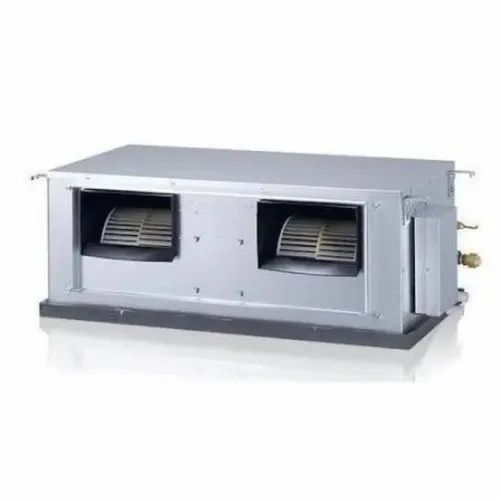
| Ducted packaged unit | Open office, event area or larger floor requiring distributed cooling | Measure doors, lifts, floor loading, duct length, exhaust route and noise limits. |
| Several spot coolers | Separate critical rooms when the central system serves a wider building | Check circuit capacity and stage compressor starts to prevent trips. |
For replacement commercial AC rental, record the access route, door and lift dimensions, placement restrictions, electrical connection and permitted noise level before dispatch. A unit that fits the load can still fail as a solution if it cannot enter the building or discharge hot air.
Mumbai humidity makes condensate control part of the format decision. Use a gravity drain, condensate pump or collection tank, and verify that hoses cannot kink or overflow. If a generator supplies the units, size it for compressor starting current and transient voltage drop, not only running kW.
Decide whether repair or emergency rental is the cheaper risk
Arrange commercial AC on hire after breakdown in Andheri when the repair timeline extends beyond the remaining operating hours, a critical room is already gaining heat, or one failed system has stopped an entire floor.
Waiting is cheaper only when the fault is local, parts are available, and the affected area can remain within its safe temperature range.
| Option | What it means | When it applies |
|---|---|---|
| Repair first | Keep the existing system offline while a technician diagnoses and fixes it | The repair time is confirmed, parts are available, and lost operations cost less than temporary cooling |
| Targeted rental | Cool only the server room, control room, reception area or production station | A critical zone needs protection but the rest of the building can operate without full HVAC |
| Full temporary replacement | Provide cooling for the failed floor or building zone | The outage has no firm repair deadline, affects customer-facing operations, or threatens stock, equipment or production |
Do not compare rental price with the repair invoice alone. Include halted work, spoiled stock, staff relocation, customer disruption and overtime. Japs Aircon can help assess whether a split, portable or ducted arrangement fits the affected zone rather than assuming the failed system’s capacity is the correct rental size.
Before approving a commercial ac hire emergency, confirm:
- The unit’s delivered capacity and the expected room-temperature trend
- Electrical supply, access route, duct and drainage path, noise limits and floor loading
- Condensate operation, alarms and operating hours
- Breakdown response time and responsibility for generator movement or refuelling
If these details remain unknown, a low hire quote can conceal another outage.
Related products
Split Air Conditioners For Hire & Rental Split Air Conditioners For Hire & Rental “Japs Aircon” Rental Systems have a range of split air conditioners to suit all of your cooling needs. Whether you are looking to ventilate your. View product → |
Portable Air Conditioners For Hire & Rental Portable Air Conditioners For Hire & Rental Portable Air Conditioners for hire from Climate Rental Solutions are suitable for many commercial and industrial cooling applications. View product → |
Control installation, electrical supply and handover risks
Do not accept a temporary unit because it starts blowing cold air. Treat the installation as a controlled change, with one named person responsible for handover. Isolate and lock out the failed equipment; never bypass overloads, interlocks or other protection devices to keep it running.
1. Confirm the electrical match before connection: voltage, phase, frequency, socket or isolator rating, earth continuity, breaker capacity and cable route. If a generator is used, check compressor starting current, transient voltage drop and total kVA; agree who will move or refuel it.
2. Inspect the installation route. Secure cables and hoses away from walkways, protect electrical and IT equipment from leaks, confirm doors, lifts, floor loading and exhaust-duct limits, and keep required security or after-hours access available.
3. Run the handover test under operating conditions. Record delivered cooling capacity, supply-air and return-air temperatures, room-temperature trend, electrical current, condensate drainage, alarms and operating hours.
4. Confirm the operating boundary in writing: who monitors the unit, who clears condensate, who responds to alarms, and the breakdown response time. A low commercial AC on hire rate is not cheap if these responsibilities are unclear.
Keep the handover record with the failure log and note return-to-service readings. This gives you evidence that the temporary cooling works and prevents a disputed callout when it does not.
Frequently asked questions
What should you do during the first 30 minutes of a business AC failure?
Stop the system when you find burning smells, exposed wiring, water near electrics, abnormal compressor noise or a protection device that will not reset. Isolate the unsafe equipment, move people away from hazards, and record alarms, room temperatures, leaks and recent operating changes.
How do you choose the right temporary commercial AC after a breakdown?
Check the cooling load of the affected zone before hiring equipment. Account for room size, occupancy, windows, equipment heat, outdoor conditions and ventilation rather than choosing a unit by floor area alone.
Which commercial AC rental format suits a failed business zone?
Use portable units when access and fast deployment matter, split systems when you have suitable outdoor-unit space, and ducted systems when cooling must reach enclosed rooms or several connected areas. Check access routes, condensate drainage and building restrictions first.
How should you compare repair with emergency commercial AC hire?
Compare the repair diagnosis, parts lead time, technician availability and expected downtime with rental, delivery, installation, electricity and removal costs. Include the financial effect of lost staff productivity, stock, customers or production.
What installation and handover checks prevent further AC problems?
Confirm electrical capacity, isolators, cable protection, condensate drainage, airflow, temperature control and safe equipment placement. Record the unit serial number, operating instructions, emergency contact and agreed removal date at handover.
Related products
If you need a quick and efficient air conditioning hire solution, “Japs Aircon” Rental Systems offers a professional and cost-effective service... View product → |
Ductable Air Conditioners For Hire & Rental Ductable Air Conditioners For Hire & Rental Carrier Rental Systems have a range of ducted air conditioners available to suit all applications. View product → |
Rental AC For Commercial Commercial AC Rental Services. In addition to being amongst the leading central air conditioning dealers in the West region for Blue Star, we serve... View product → |
Tower AC on hire and rental We provide Tower AC on hire and rental basis in all over Mumbai View product → |