A hired cooling system is worthwhile when it solves a temporary capacity problem without creating larger problems in power, ventilation, noise, drainage or crowd movement. By the end, you can estimate the venue’s real cooling demand, compare equipment types and calculate whether rental beats buying, using existing HVAC or cooling only selected areas.
Key takeaways
- Hire AC for one-off concerts, temporary venues and halls with inadequate HVAC.
- Estimate demand from room size, audience count, lighting, equipment and outdoor conditions.
- Use ducted systems for enclosed halls and spot cooling for backstage or equipment areas.
- Compare quotations for capacity, installation, operators, fuel, delivery, removal and standby support.
When Does Hiring Commercial AC Make Financial Sense?
Commercial AC on hire for concerts makes financial sense for one-off shows, seasonal programmes, temporary venues and halls lacking sufficient permanent HVAC. It also protects a fixed opening date when installation must be completed quickly.
The practical test for “is commercial ac on hire for concerts worth it” is total cost per cooled event or attendee-hour, not the daily machine rate.
| Option | Financial meaning | Best fit |
|---|---|---|
| Rental | Pay for equipment and service without permanent capital | One-off or temporary venues, urgent installation, uncertain demand |
| Purchase | Spread equipment, installation and maintenance across repeated use | Many cooled operating days each year |
| Existing HVAC | Lowest added cost when capacity, controls and fresh-air provision are adequate | A properly sized permanent system |
| Partial cooling | Lower upfront spend but may leave audience areas uncomfortable while still using substantial power | Only when comfort requirements are limited |
Compare delivery, installation, ducting, electrical distribution, generator fuel, operators, standby units, overtime, taxes, removal and cancellation charges. Obtain running current, starting characteristics, voltage, phase and maximum demand; lighting, audio, catering and emergency systems share the available supply.
Commercial AC on hire for concerts earns its premium when the provider handles commissioning, breakdown response, replacement equipment and weather-related changes. Require those duties, response times and cancellation terms in writing. A low machine rate is not a saving if extra generators, operators, refuelling or emergency equipment appear later.
How Do You Estimate Cooling Demand Before Booking Units?
Estimate cooling demand from heat sources and air movement, not floor area multiplied by a generic capacity figure. A dense audience can add more load than the building itself once the concert starts, increasing both temperature and humidity.
1. Record floor area, ceiling height, audience capacity, expected occupancy, outdoor dry-bulb temperature, outdoor humidity, wall and roof exposure, solar gain, door-opening frequency and required outdoor-air volume. Include infiltration through open doors and leakage through the building envelope.
2. Add internal gains from the audience, performers, crew, stage lighting, LED walls, amplifiers, control desks, catering equipment and other operating loads. Separate sensible heat from latent moisture; Mumbai’s humid air makes dehumidification and condensate disposal part of the calculation.
3. Request a room-by-room load schedule showing design assumptions, rather than a single tonnage figure. A crowded hall, lightly occupied green room, production office and VIP room need different inputs, as do queues and backstage spaces.
4. For a preliminary comparison, convert consistently: 1 refrigeration ton equals about 3.517 kW of cooling capacity. Do not confuse cooling capacity with electrical input; check each unit’s efficiency, fan power, voltage, phase, running current and maximum demand before comparing event cooling costs.
5. Treat tents and marquees separately. Solar gain and air leakage can overwhelm an enclosed-room estimate, so perimeter portable units may waste capacity; assess conditioned-air ducting, air curtains or partial enclosure instead.
Which AC System Fits Each Concert Area?
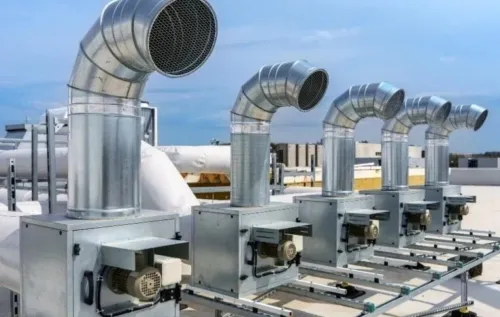
Match the system to the space, not simply to the venue’s total floor area. An enclosed audience hall usually benefits from ducted packaged units or air handlers, which spread air more evenly than several free-blowing spot coolers.
| Area | Suitable approach | Main issue to check |
|---|---|---|
| Audience hall | Ducted packaged units or air handlers | Keep supply air, noise and ducting away from microphones, sightlines, exits and service corridors |
| Backstage, control rooms and production offices | Portable spot coolers | Provide hot-air exhaust, condensate drainage and compatible voltage, phase and running current |
| VIP areas and green rooms | Split systems or quiet ducted units | Confirm outdoor-unit placement, pipe-run length and installation time |
| Queues and ticketing | Air curtains or targeted ducted cooling | Perimeter spot cooling wastes capacity in open circulation areas |
| Tents and open-sided spaces | Conditioned-air ducting, air curtains or a more enclosed envelope | Solar gain and air leakage can overwhelm enclosed-room calculations |
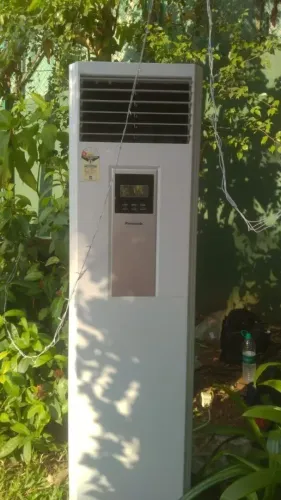
Portable units provide useful local relief but lose effectiveness when exhaust ducts are long or sharply bent. Tower units save floor space, yet their concentrated airflow can create drafts and uneven coverage.
Compare cooling capacity, airflow direction, sound-pressure level, footprint, duct routing, installation time and removal access before approving commercial air conditioner hire. Check electrical demand alongside lighting, audio and catering loads; compressor starts can trip supplies or cause voltage dips, so staged starting or a dedicated circuit may be necessary.
In a tent, simply placing units around the perimeter rarely cools the occupied centre.
What Must Be Planned Before the Audience Arrives?
Before equipment arrives, lock down access, placement, drainage, power and noise controls. A cooling system that fits the load can still disrupt a concert if it cannot reach the venue, blocks an exit or trips the audio supply.
1. Walk the delivery route with the venue team. Record loading-bay height, doorway widths, lift capacity, floor-loading limits, rigging restrictions and approved placement zones for indoor units, condensers and ducts.
2. Mark cable and duct routes on the event plan. Use floor ramps or overhead routing, keep emergency exits unobstructed and preserve clear paths between entrances, seating, bars and service areas.
3. Approve condensate disposal before installation. Specify drain falls, pump capacity, secondary containment and the response to a blocked hose; Mumbai’s high humidity can produce substantial water, and a leaking line can create a slip hazard.
4. Request each unit’s running current, starting characteristics, voltage, phase and maximum demand. Check the venue supply against lighting, audio, catering and emergency loads, not cooling alone.
5. For generator-backed concert venue AC rental in Mumbai, verify continuous and transient capacity rather than nameplate kVA. Stage compressor starts or specify variable-speed equipment to prevent voltage dips that disturb sound and lighting.
6. Put noise into the purchase specification. Obtain sound-pressure levels, condenser locations, vibration isolation and acoustic-treatment details, then test during sound check with doors opening and closing.
7. Confirm the cooling test result, operator contact, blocked-drain response and removal window before doors open. Record who can approve temperature changes during the show.
How Should You Compare Quotations and Make the Final Call?
A useful quotation lets you test performance before comparing price. Ask for a room-by-room equipment schedule, calculated cooling load, expected temperature and humidity, fresh-air strategy, duct layout, condensate plan and electrical single-line requirements.
Request these commercial terms in writing:
- Transport, placement, rigging, ducting, distribution boards, generator connection, fuel, operators, standby capacity, overnight security, taxes, removal and damage charges.
- Delivery and commissioning deadlines, test conditions, breakdown response time, replacement-unit availability, weather contingencies and who controls temperature changes during the concert.
- Running current, starting characteristics, voltage, phase and maximum demand, checked against lighting, audio, catering and emergency loads.
AC recirculation does not prove compliance with ASHRAE Standard 62.1 outdoor-air rates for assembly spaces. Demand a separate ventilation plan and consider carbon-dioxide monitoring during occupancy.
| Compare | Acceptable quotation | Warning sign |
|---|---|---|
| Cooling | Room-by-room load and capacity | One total tonnage figure |
| Ventilation | Outdoor-air volume and duct route | “Fresh air” with no calculation |
| Power | Single-line diagram and maximum demand | Capacity based only on cooling |
| Service | Response time, standby unit and operator coverage | Equipment-only supply |
Compare event cooling costs per cooled event or attendee-hour, not the machine rate. For concert venue AC rental in Mumbai, Japs Aircon can provide practical local coordination when access, installation and rapid response share one site.
Choose rental when that risk transfer justifies its premium; reject it when recurring event days favour permanent HVAC or the quote cannot prove ventilation, power and drainage performance.
Related products
Rental AC For Residential We provide Portable Air-Conditioners on rent for outdoor and indoor events like concerts, Live Shows, Exhibitions, Sports Events etc. View product → |
Rental AC For Exhibition We provide Portable Air-Conditioners on rent for outdoor and indoor events like concerts, Live Shows, Exhibitions, Sports Events etc. View product → |
Frequently asked questions
When does hiring commercial AC make financial sense for a concert venue?
Commercial AC on hire makes financial sense for one-off shows, seasonal programmes, temporary venues and halls without enough permanent HVAC. It also helps protect a fixed opening date when permanent installation would take too long.
How do you estimate cooling demand before booking concert AC units?
Assess the venue’s floor area and ceiling height, expected audience, doors and ventilation, stage lighting, sound equipment, weather and the heat produced by staff and performers. Give these details to the rental provider before selecting capacity.
Which AC system fits each concert area?
Match the system to the space: use distributed or ducted cooling for audience areas, targeted units for backstage rooms and control areas, and equipment cooling where sound, lighting or electrical systems need temperature control.
What must be planned before the audience arrives?
Confirm delivery access, electrical supply, duct routes, condensate drainage, noise and airflow positions, installation time, safety clearances, operating responsibility and a response plan for breakdowns.
How should you compare commercial air conditioner hire quotations?
Compare the quoted cooling capacity and equipment type, plus delivery, installation, cabling, ducting, operators, power or fuel, standby support, removal, taxes and damage terms. Choose the quotation that covers the full event requirement, not just the lowest daily rate.
Related products
Rental AC For Commercial Commercial AC Rental Services. In addition to being amongst the leading central air conditioning dealers in the West region for Blue Star, we serve... View product → |
If you need a quick and efficient air conditioning hire solution, “Japs Aircon” Rental Systems offers a professional and cost-effective service... View product → |
Portable Air Conditioners For Hire & Rental Portable Air Conditioners For Hire & Rental Portable Air Conditioners for hire from Climate Rental Solutions are suitable for many commercial and industrial cooling applications. View product → |
Ductable Air Conditioners For Hire & Rental Ductable Air Conditioners For Hire & Rental Carrier Rental Systems have a range of ducted air conditioners available to suit all applications. View product → |